Plastic vs wood chicken coop: which should you buy?
By Hannah Prescott · · 5 min readWhat changes day to day?
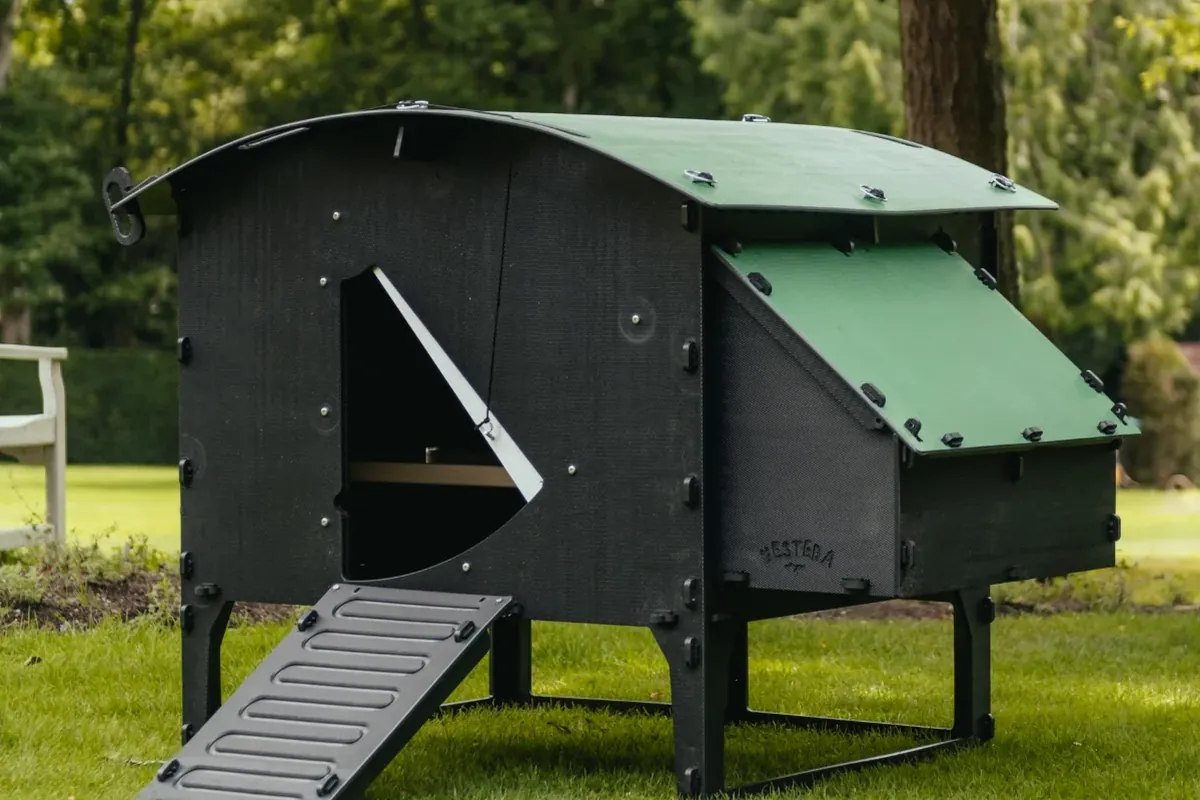
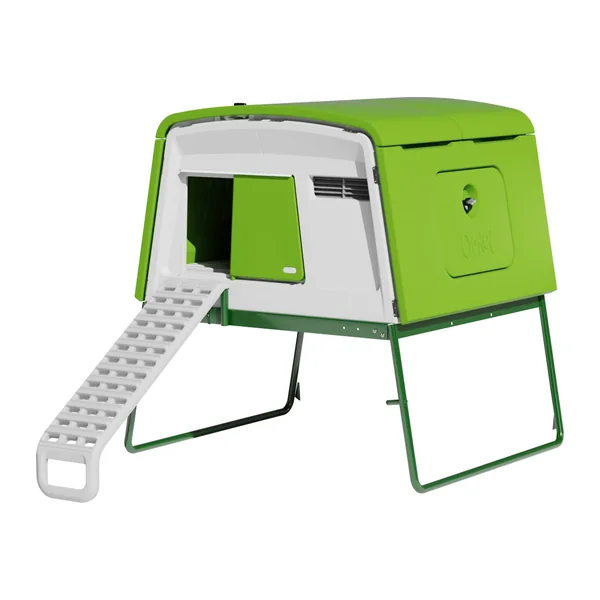
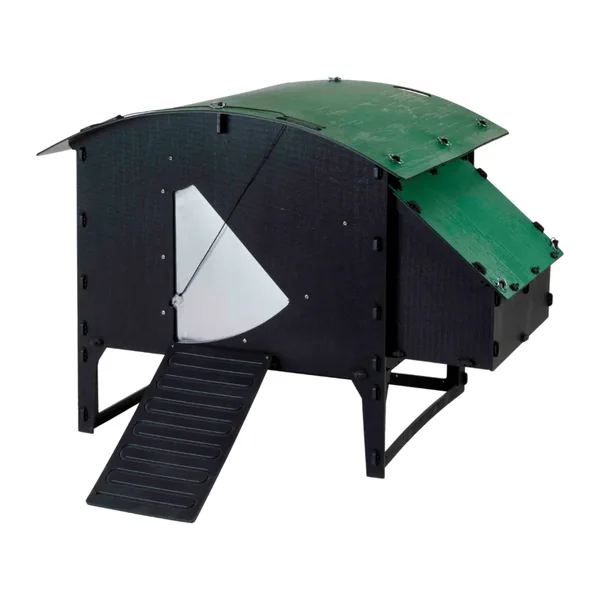
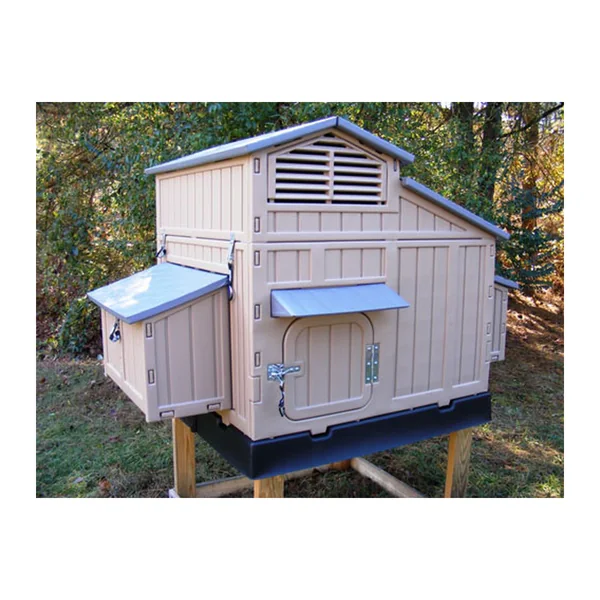
Cleaning, above all. A plastic coop is a set of smooth panels: you pull a tray, tip it, and wipe or hose the inside. Omlet says its Eglu Cube "deep cleans in 10 minutes" and that the Go Up can be jet washed inside and out. Nestera's roof lifts off and its nest boxes detach. Formex gives the Snap Lock a removable litter tray and calls it "maintenance free".
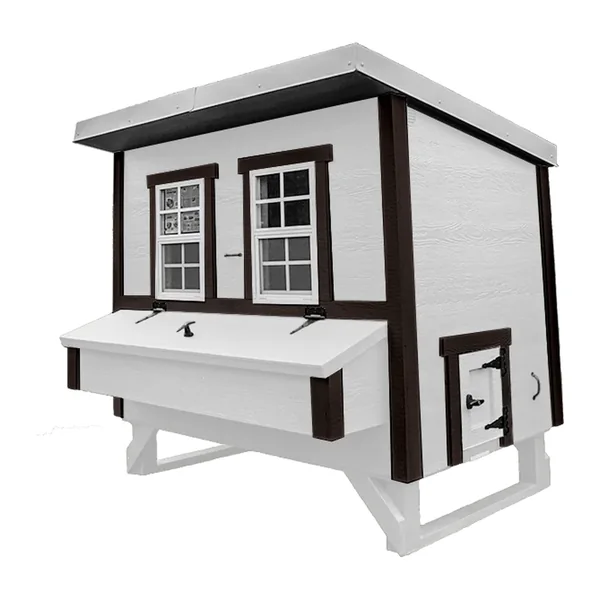
A wooden coop asks for a different routine. OverEZ's coops have a man door and no tray: you reach or step in with a shovel. The Aivituvin has a pull-out tray. Carolina Coops goes the other way entirely, with a deep-litter henhouse it says needs "no cleaning for at least a year or longer".
In our formula that shows up plainly. The five plastic coops all score 10 out of 10 for cleaning. The seven wooden ones range from 4 (OverEZ) to 10 (the American Coop's deep litter).
Which lasts longer?
We can only tell you what the makers will sign. Omlet gives 10 years on the Eglu Cube and Eglu Pro (2 years on the Go Up). Nestera gives 25 years on its recycled-plastic coops. Among the wooden coops, Roost & Root states 2 years against material and workmanship defects; OverEZ, Carolina Coops and Aivituvin state no length on the pages we read.
That doesn't mean a cedar coop lasts two years. It means that if something fails in year four, one buyer has a document and the other has a phone call. Warranty counts for 15% of our score for that reason.
Wood also needs you. The American Coop ships unpainted, so you paint or stain it before it meets weather. OverEZ panels arrive painted, with a resin-treated floor and siding. A $460 coop in light solid wood will want treating and a dry base from the first season.
Which gives more room for the money?
Wood, once the flock grows. The biggest plastic house in our comparison is the Snap Lock Big at 17.3 sq ft, then the Eglu Pro at 16.7. The OverEZ Large has 30.8 sq ft and the XL 40.8. At 3 sq ft of house per hen, the minimum UMN Extension publishes, that's ten and thirteen hens against five.
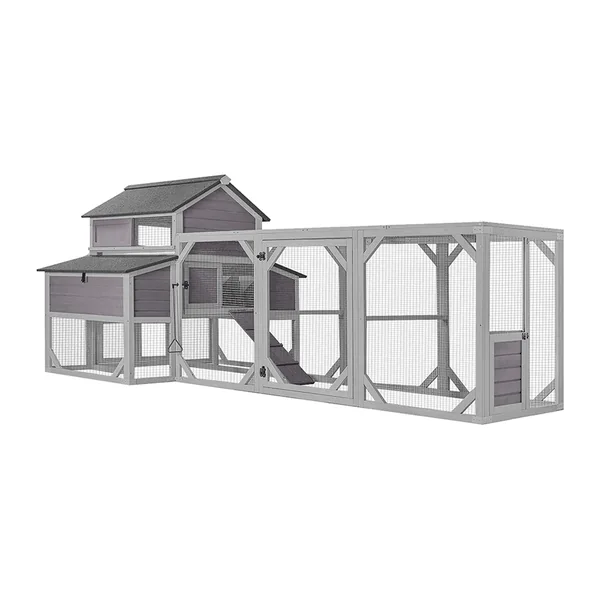
For small flocks the picture flips. The Nestera Large Lodge offers 11.9 sq ft for $789 and the Eglu Cube 10 sq ft for $1,119, both without a run. The cheapest wooden coop, the Aivituvin AIR46, includes a run for $459.99 but doesn't publish its house size at all.
And if you want to walk into your coop, the choice is made for you: the three walk-ins we list (ranked here) are timber and wire.
Video: "Plastic Vs Wooden Chicken coop -Which is better? - Beginners guides to chicken keeping", Court Farm Chickens on YouTube. Not made by us; chosen because it shows the product or the topic clearly.
Which is warmer in winter, and cooler in summer?
Makers answer this differently, and few give numbers. Omlet describes twin-wall panels with 2 inches of insulation and draft-free ventilation. Nestera claims "superior thermal insulation" without a figure, plus adjustable vents. OverEZ fits a radiant-barrier ceiling "to keep the coop cooler in the summer heat", gable vents and opening windows. Roost & Root and Carolina Coops sell storm panels or shields as options.
What matters more than the wall is the air. The University of Minnesota's winter advice is to control moisture through ventilation and manure management, because damp plus cold causes frostbite (UMN Extension). Any coop here can do that if its vents stay open.
One caution for plastic: the same UMN page advises against roosts in "metal, plastic, or other materials that retain the cold". The Eglu Cube has moulded roosting bars, not wooden perches. In a northern winter, ask the maker what it recommends. Our guide to winterizing a chicken coop has the full list.
Which is safer from predators?
Neither material wins by itself. What counts is what's published about locks, mesh and height. The Omlet coops describe two-step locks and stand on raised frames; their weld-mesh run and anti-dig skirt come when you add the run. Nestera's and Formex's pages describe no lock.
On the wooden side, Roost & Root and Carolina Coops are the best defended in our comparison: welded wire or half-inch hardware cloth, heavy latches or lockable doors, raised and closed sleeping quarters. OverEZ coops have lockable latches on every door but no run. The details are in how to predator proof a chicken coop.
So which should you buy?
Three to six hens, a suburban yard, and no wish to spend Sundays scrubbing: plastic. The Eglu Cube leads our ranking at 9.2/10; the Nestera Large Lodge is the value choice at 8.9/10 if you supply the run and the lock.
Ten hens or more, or a coop that has to look like a building: wood. The OverEZ Large is the cheapest way to 30 sq ft, and the walk-ins from Roost & Root and Carolina Coops are small barns with the run built in.
Not sure you'll still keep chickens in two years? A cheap wooden coop with its run, like the Aivituvin, is the low-risk way to find out. See all twelve in our chicken coop ranking.
The products in this guide, side by side
| Product | |||||
|---|---|---|---|---|---|
| Hens, says the brand | 6 hens | 5 hens | 12 hens | 15 hens | 8 hens |
| Hens at 3 sq ft each | 3 hens | 3 hens | 5 hens | 10 hens | House size not published |
| Material | Plastic | Plastic | Plastic | Wood | Wood |
| Run | Not included | Not included | Not included | Not included | Included, 41 sq ft |
| Predator protection published | Locking latches, raised house | Raised house | None published | Locking latches, raised house | Locking latches, welded mesh |
| Cleaning | Tray, hose-clean plastic | Tray, hose-clean plastic | Tray, hose-clean plastic | Access door only | Pull-out tray |
| Warranty | 10-year | 25-year | Not stated | Not stated | Not stated |
| Where to buy | Check price at Omlet | Check price at Nestera | Check price at Formex | Check price at OverEZ | Check price at Aivituvin |
✓ marks the best figure of the row. Prices checked November 14, 2026 on each brand's own US store.
This guide helps you choose and budget a coop; it isn't legal or veterinary advice. City codes, county rules and HOA covenants decide whether you can keep hens and where a coop may sit: check yours before you order. For flock health questions, ask a vet or your state Extension office.